Saturday, December 08, 2007

Are the Wheels Coming Off the Bus?

Exploring the notion of "Peak Oil". Is "Hubberdt's Curve" for real?


With Joseph (right) in Sevilla, moments after delivering a muezzin's call to prayer from the Giralda Tower (formerly a minaret) at the cathedral

Clever... Real funny guys... Well, OK. Actually, it was just me who did it. Something I wouldn't even consider doing today... My best friend Joseph moved to Spain in 1989, with little more than the clothes on his back, a basic knowledge of Spanish, and a determination to marry the lovely madrileña he had fallen in love with back here. Shortly before that, you might say that we were as cocky, combative, parochial, and provincial as two Irish-Catholic Americans from Boston can commonly be.

No, something I wouldn’t consider doing today… It’s funny to look back sometimes and to reflect upon the fact that although things don’t look very different on the surface at first glance, the world is constantly changing and shifting under our feet as the years go by.

A simple change of scene can go a long way towards erasing provincialism. People who’ve spent a significant amount of time out of the country often point out to me that there is a certain (and predictable) way of presenting news stories here, and that the way the news is presented overseas can be quite different. A lot of things tend to go under-reported here, or even unreported altogether. There is a whole perspective out there that can be quite alien to our way of thinking, which is why we find ourselves puzzled when foreigners question what we consider to be our pure motives.

Joe and I have kept in touch, we’ve usually been able to get together at least once a year, and we often exchange views on world events and politics. When I look at a situation like Iraq, I tend to look at the origin of such a conflict in terms of a clash of civilizations and competing worldviews, with part of the world embracing globalization enthusiastically, even to the point of forcing it upon those who fear it and resist it. In analyzing conflicts, I tend to lay a heavy emphasis on ideology, religion, and mankind's seemingly endemic urge towards tribalism.

Joseph certainly doesn’t resist those ideas or reject them out of hand, but I think he gently tries to lead me towards considering an old axiomatic dictum – Follow the Money.

Joe's been asking lately what I think about the situation with Iran... My take is, the administration would probably like to strike Iran if they could (recent NIE estimate be damned), but that this congress would never go along with it. Joe's not so sure, I think, reasoning that there are iron laws of economics (that we are locked into) at play here.

In making his own way in Spain, Joe managed (impressively, I might add, as a non-citizen) to land a job as a sales rep for Alcon, and eventually worked his way up to the most senior executive levels of marketing management, handling hundreds of millions of dollars in budgets for a couple of different pharmaceutical companies. He now runs his own leadership and strategic management consulting company. ( And he did marry the girl :-) ) In other words, he’s level-headed, knows a thing or two about business, and the cash flows that businesses need to operate. Neither one of us is given over to conspiracy theories or overall cynicism... but have we been had?

One of the most dramatic effects of globalization over the last couple of decades has been the explosive growth of the economies of China and India, each of which have populations of over a billion people. I know it’s not fair to pull the ladder up behind us, but in a world where markets are driven by energy, energy driven by fossil fuels, how sustainable is this way of living?


The Fall of Saigon - A metaphor for the global economy?

Follow the money. Specifically, follow the money related to oil. Are we approaching the end of our way of living? Are the wheels about to come off the bus?
If current predictions of population growth prove accurate and patterns of human activity on the planet remain unchanged, science and technology may not be able to prevent either irreversible degradation of the environment or continued poverty for much of the world.
--Royal Society of London and U.S. National Academy of Sciences'

It is impossible for the world economy to grow its way out of poverty and environmental degradation ... As the economic subsystem grows it incorporates an even greater proportion of the total ecosystem into itself and must reach a limit at 100 percent, if not before.
--Herman Daly

What has gone wrong? Why is the dream that should be in our grasp turning to a nightmare? The fundamental nature of our problem was dramatically articulated in 1968 by Kenneth Boulding in his classic essay "The Economics of the Coming Spaceship Earth."' Boulding suggested that our problem results from acting like cowboys on a limitless open frontier when in truth we inhabit a living spaceship with a finely balanced life-support system.
-- David C. Korten, When Corporations Rule The World

We joke about having transferred from the Marine Corps to the Oil Corps, or the Petrol Battalion, and while we laugh at our jokes and we all think we're damn funny jarheads, we know we might soon die, and this is not funny, the possibility of death, but like many combatants before us, we laugh to obscure the tragedy of our cheap, squandered lives with the comedy of combat and being deployed to protect oil reserves and the rights and profits of certain American companies, many of which have direct ties to the White House and oblique financial entanglements with the secretary of defense, Dick Cheney, and the commander in chief, George Bush, and the commander's progeny. We know this because Kuehn, one of our representatives from Texas, says, "All those old white f*****s from Texas have their fat hands in Arab oil. The motherf*****rs drink it like it's beer." And at this point we also know that the outcome of the conflict is less important for us-the men who will fight and die-than for the old white f*****s and others who have billions of dollars to gain or lose in the oil fields, the deep, rich, flowing oil fields of the Kingdom of Saud.
-- Anthony Swofford, Jarhead
Alarmist, crackpot conspiracy theories? A bit of both? I'll report, you decide.

British Comedian and Political Activist Robert Newman's History of Oil ( Part 1 of 9 )


The falling dollar, falling home prices, the subprime mortgage crisis, Tom Brady's girlfriend demanding to be paid in euros... WBUR On Point - debating the state of the economy with Dr. Doom. "Investment guru Peter Schiff, who CNBC has dubbed "Dr. Doom," has prophesied a flight from the dollar abroad and inflation, recession, even a depression at home. As the author of Crash Proof: How to Profit from the Coming Economic Collapse, Schiff has a vested interest in gloom. Still, he's made money as a bear, and it may pay to listen to him now."

Extended excerpts from http://www.lifeaftertheoilcrash.net/

Civilization as we know it is coming to an end soon. This is not the wacky proclamation of a doomsday cult, apocalypse bible prophecy sect, or conspiracy theory society. Rather, it is the scientific conclusion of the best paid, most widely-respected geologists, physicists, bankers, and investors in the world. These are rational, professional, conservative individuals who are absolutely terrified by a phenomenon known as global "Peak Oil."

Oil will not just "run out" because all oil production follows a bell curve. This is true whether we're talking about an individual field, a country, or on the planet as a whole.

Oil is increasingly plentiful on the upslope of the bell curve, increasingly scarce and expensive on the down slope. The peak of the curve coincides with the point at which the endowment of oil has been 50 percent depleted. Once the peak is passed, oil production begins to go down while cost begins to go up.

In practical and considerably oversimplified terms, this means that if 2005 was the year of global Peak Oil, worldwide oil production in the year 2030 will be the same as it was in 1980. However, the world’s population in 2030 will be both much larger (approximately twice) and much more industrialized (oil-dependent) than it was in 1980. Consequently, worldwide demand for oil will outpace worldwide production of oil by a significant margin. As a result, the price will skyrocket, oil dependant economies will crumble, and resource wars will explode.

Peak Oil is also called "Hubbert's Peak," named for the Shell geologist Dr. Marion King Hubbert. In 1956, Hubbert accurately predicted that US domestic oil production would peak in 1970. He also predicted global production would peak in 1995, which it would have had the politically created oil shocks of the 1970s not delayed the peak for about 10-15 years...

Petrochemicals are key components to much more than just the gas in your car. As geologist Dale Allen Pfeiffer points out in his article entitled, "Eating Fossil Fuels," approximately 10 calories of fossil fuels are required to produce every 1 calorie of food eaten in the US...

It's not just transportation and agriculture that are entirely dependent on abundant, cheap oil. Modern medicine, water distribution, and national defense are each entirely powered by oil and petroleum derived chemicals...

In addition to transportation, food, water, and modern medicine, mass quantities of oil are required for all plastics, all computers and all high-tech devices...

What about alternative energy systems like solar panels and wind turbines? Are they also manufactured using petroleum and petroleum derived resources?

When considering the role of oil in the production of modern technology, remember that most alternative systems of energy — including solar panels/solar-nanotechnology, windmills, hydrogen fuel cells, biodiesel production facilities, nuclear power plants, etc. all rely on sophisticated technology and mettalurgy.

In short, the so called "alternatives" to oil are actually "derivatives" of oil. Without an abundant and reliable supply of oil, we have no way of scaling these alternatives to the degree necessary to power the modern world.

Is the modern banking system entirely dependent on ever-increasing amounts of cheap oil?

The global financial system is entirely dependent on a constantly increasing supply of oil and natural gas. The relationship between the supply of oil and natural gas and the workings of the global financial system is arguably the key issue to understanding and dealing with Peak Oil. In fact this relationship is far more important than alternative sources of energy, energy conservation, or the development of new energy technologies...

The issue is not one of "running out" so much as it is not having enough to keep our economy running. In this regard, the ramifications of Peak Oil for our civilization are similar to the ramifications of dehydration for the human body. The human body is 70 percent water. The body of a 200 pound man thus holds 140 pounds of water. Because water is so crucial to everything the human body does, the man doesn't need to lose all 140 pounds of water weight before collapsing due to dehydration. A loss of as little as 10-15 pounds of water may be enough to kill him.

In a similar sense, an oil based economy such as ours doesn't need to deplete its entire reserve of oil before it begins to collapse. A shortfall between demand and supply as little as 10 to 15 percent is enough to wholly shatter an oil-dependent economy and reduce its citizenry to poverty.

The coming oil shocks won't be ... short lived. They represent the onset of a new, permanent condition. Once the decline gets under way, production will drop (conservatively) by 3% per year, every year. War, terrorism, extreme weather and other "above ground" geopolitical factors will likely push the effective decline rate past 10% per year, thus cutting the total supply by 50% in 7 years.


These estimate comes from numerous sources, not the least of which is Vice President Dick Cheney himself. In a 1999 speech he gave while still CEO of Halliburton, Cheney stated:

"By some estimates, there will be an average of two-percent annual growth in global oil demand over the years ahead, along with, conservatively, a three-percent natural decline in production from existing reserves.That means by 2010 we will need n additional 50 million barrels per day."

Some geologists now believe 2005 was the last year of the cheap-oil bonanza, while many estimates coming out of the oil industry indicate "a seemingly unbridgeable supply/demand gap opening up after 2007," which will lead to major fuel shortages and increasingly severe blackouts beginning around 2008-2012. As we slide down the downslope slope of the global oil production curve, we may find ourselves slipping into what some scientists are already calling the coming "post industrial stone age."

Is the war in Iraq really a war for the world's last remaining significant sized deposits of oil?

Although the answer to this question should be obvious, broaching the issue in such a highly public forum would bring more skeletons out of Dick Cheney's energy task force closet than any sane member of the Senate, Republican or Democrat, would ever want to face.

Global oil discovery peaked in 1962 and has declined to virtually nothing in the past few years. We now consume 6 barrels of oil for every barrel we find. As mentioned previously, this is exactly what happened during the oil shocks of the 1970s - shortfalls in supply as little as 5% drove the price of oil up near 400%. Demand did not fall until the world was mired in the most severe economic slowdown since the Great Depression. The only thing that alleviated the economic crisis was the discovery of the world's last few "elephant" sized oil fields in the North Sea and Alaska as well as increased production from nations like Venezuela and Saudi Arabia. Once global oil production peaks (if it hasn't already) turning to new sources of supply won't be an option.

As affordable oil is necessary to power any serious attempt at at a global switchover to alternative sources of energy, these "extreme" prices will severely hamstring the ability of the market to handle these problems. The economic fallout from such high prices will likely raise geopolitical tensions (i.e. war) thereby futher hampering the development of large-scale alternative sources of energy.

It is becoming evident that the financial and investment community begins to accept the reality of Peak Oil, which ends the first half of the age of oil. They accept that banks created capital during this epoch by lending more than they had on deposit, being confident that tomorrow’s expansion, fuelled by cheap oil-based energy, was adequate collateral for today’s debt. The decline of oil, the principal driver of economic growth, undermines the validity of that collateral which in turn erodes the valuation of most entities quoted on Stock Exchanges. The investment community, however, faces a dilemma. It desires to protect its own fortunes and those of its privileged clients while at the same time is reluctant to take action that might itself trigger the meltdown. It is a closely knit community so that it is hard for one to move without the others becoming aware of his actions.

The scene is set for the Second Great Depression, but the conservatism and outdated mindset of institutional investors, together with the momentum of the massive flows of institutional money they are required to place, may help to diminish the sense of panic that a vision of reality might impose. On the other hand, the very momentum of the flow may cause a greater deluge when the foundations of the dam finally crumble. It is a situation without precedent.

Nearly all the work done in the world economy, all the manufacturing, construction, and transportation, is done with energy derived from fuel. The actual work done by human muscle power is miniscule by comparison. And, the lion's share of that fuel comes from oil and natural gas, the primary sources of the world's wealth.

In October 2005, the normally conservative London Times acknowledged that the world's wealth may soon evaporate as we enter a technological and economic "Dark Age." In an article entitled "Waiting for the Lights to Go Out" Times columnist Bryan Appleyard reported:

"Oil is running out; the climate is changing at a potentially catastrophic rate; wars over scarce resources are brewing; finally, most shocking of all, we don't seem to be having enough ideas about how to fix any of these things. "

US News and World Report recently published a six page article documenting the nightmarish scenarios soon to unfold across North America. According to the normally conservative publication, people in the northeastern US could soon be facing massive layoffs, rotating blackouts, permanent industrial shutdowns, and catastrophic breakdowns in public services as a result of shortages of heating oil and natural gas.

What all of this means, in short, is that the aftermath of Peak Oil will extend far beyond how much you will pay for gas. To illustrate: in a July 2006 special report published by the Chicago Tribune, Pullitzer Prize winning journalist Paul Salopek described the consequences of Peak Oil as follows:

. . . the consequences would be unimaginable. Permanent fuel shortages would tip the world into a generations-long economic depression. Millions would lose their jobs as industry implodes. Farm tractors would be idled for lack of fuel, triggering massive famines. Energy wars would flare. And careless suburbanites would trudge to their nearest big box stores, not to buy Chinese made clothing transported cheaply across the globe, but to scavenge glass and copper wire from abandoned buildings.

Journalist Jonathan Gatehouse summarized the conclusions of Oxford trained geologist Jeremy Leggett, author of The Empty Tank: Oil, Gas, Hot Air, and the Coming Financial Catastrophe, in a 2006 Macleans article as follows, emphasis added:

. . . when the truth can no longer be obscured, the price will spike, the economy nosedive, and the underpinnings of our civilization will start tumbling like dominos. "The price of houses will collapse. Stock markets will crash. Within a short period, human wealth -- little more than a pile of paper at the best of times, even with the confidence about the future high among traders -- will shrivel." There will be emergency summits, diplomatic initiatives, urgent exploration efforts, but the turmoil will not subside. Thousands of companies will go bankrupt, and millions will be unemployed. "Once affluent cities with street cafés will have queues at soup kitchens and armies of beggars. The crime rate will soar. The earth has always been a dangerous place, but now it will become a tinderbox."


By 2010, predicts Leggett, democracy will be on the run. . . . economic hardship will bring out the worst in people. Fascists will rise, feeding on the anger of the newly poor and whipping up support. These new rulers will find the tools of repression -- emergency laws, prison camps, a relaxed attitude toward torture -- already in place, courtesy of the war on terror. And if that scenario isn't nightmarish enough, Leggett predicts that "Big Oversight Number One" -- climate change -- will be simultaneously making its presence felt "with a vengeance." On the heels of their rapid financial ruin, people "will now watch aghast as their food and water supplies dwindle in the face of a climate seemingly going awry." Prolonged droughts will spread, decimating harvests.

In other words, if you are focusing solely on the price at the pump, buying a hybrid car, or getting some of those energy efficient light bulbs, you aren’t seeing the bigger picture.

Is the Bush administration aware of this?

As mentioned previously, Dick Cheney made the following statement in late 1999 while still CEO of Halliburton:

"By some estimates, there will be an average of two-percent annual growth in global oil demand over the years ahead, along with, conservatively, a three-percent natural decline in production from existing reserves. That means by 2010 we will need on the order of an additional 50 million barrels a day. "

To put Cheney’s statement in perspective, remember that the oil producing nations of the world are currently pumping at full capacity but are struggling to produce much more than 84 million barrels per day. Cheney’s statement was a tacit admission of the severity and imminence of Peak Oil as the possibility of the world raising its production by such a huge amount is borderline ridiculous.

In light of this information, Cheney knew the only way for Western oil majors to stay oil majors was to use force to grab what's left in the Middle East and then give the contracts to pump that oil to the oil majors. Four years after the invasion of Iraq, this is exactly what is happening.

Lest there be any doubt about what was at stake, the man who was to become one of the most powerful proponents of the invasion of Iraq went on: "Oil is unique because it is so strategic in nature. We are not talking about soapflakes or leisurewear ... The Gulf War was a reflection of that reality."

Well, seven years on, Mr Cheney's solution to the impending oil crisis is well on its way to being implemented. In the aftermath of another war, Iraq's Council of Ministers is today expected to throw open the doors to the country's oil reserves - the third largest in the world - to private companies, the first time a major Middle Eastern producer has ever done so. Source
Not surprisingly, George W. Bush has echoed Dick Cheney’s sentiments. In May 2001, Bush stated, "What people need to hear loud and clear is that we’re running out of energy in America."

The problems associated with world oil production peaking will not be temporary, and past 'energy crisis' experience will provide relatively little guidance. The challenge of oil peaking deserves immediate, serious attention, if risks are to be fully understood and mitigation begun on a timely basis. . . the world has never faced a problem like this. Without massive mitigation more than a decade before the fact, the problem will be pervasive and will not be temporary. Previous energy transitions were gradual and evolutionary. Oil peaking will be abrupt and revolutionary..

As one commentator recently observed, the reason our leaders are acting like desperados is because we have a desperate situation on our hands.

If you've been wondering why the Bush administration has been spending money, cutting social programs, and starting wars like there's no tomorrow, now you have your answer: as far as they are concerned, there is no tomorrow.

In 2003, the BBC filmed a three-part, relatively apolitical, documentary entitled "War for Oil" about the role the Bush administration's knowledge of Peak Oil played in their decision to invade and occupy Iraq. As the documentary explains, in private the Bush administration sees the war in Iraq as "a fight for survival." From a purely Machiavellian standpoint, they are probably correct in their thinking.

O'Donnell Blows a Gasket

Not Rosie... Lawrence.

From last night's McLaughlin Group program (12/07). O'Donnell goes off on a tirade that makes even Pat Buchanan look like a moderate. Regardless of how one happens to come down on the particular question at hand, consider that O'Donnell works for MSNBC. Can he do this?

Sunday, December 02, 2007

Now, This Is Really Weird...

Fr. Henry Garnet, SJ
Head of the Jesuit Mission in England
Born: 1555 at Derbyshire
Died: 3 May 1606 at Saint Paul's Churchyard, London


Were the "good old days" of faith so great? What kind of twisted minds come up with things like this?

Book bound in skin of executed Jesuit to be auctioned in England

Not to single out one side or the other (or to minimize today's common atrocities), but what kind of fanatical, blindly fundamentalistic religion was it (on both sides) that drove people to burning, crushing, drawing-and-quartering, hanging, drowning, beheading, flaying, breaking-with-the-wheel, the rack and ladder, strappado and squassation, and making book covers out of people's skin, all in the name of Faith and Truth?

The same kind that drives them into buildings in airliners today? The same that refuses to call waterboarding torture?

Who took perverse pleasure in reading a book bound in the skin of his enemy? What nerve for people of the Old World (on both sides) to call the Native Americans in the New World "savages". They obviously couldn't rightfully claim to be too far removed from savagery themselves.
A book bound in the skin of an executed Jesuit priest was to be auctioned in England.

The macabre, 17th-century book tells the story of the 1605 Gunpowder Plot and is covered in the hide of Father Henry Garnet.

The book, "A True and Perfect Relation of the Whole Proceedings Against the Late Most Barbarous Traitors, Garnet a Jesuit and His Confederates," contains accounts of speeches and evidence from the trials. It measures about 6 inches by 4 inches, comes in a wooden box and will be auctioned Dec. 2 by Wilkinson's Auctioneers in Doncaster, England.

Sid Wilkinson, the auctioneer, said: "The front cover is rather spooky because where the skin has mottled or crinkled there looks to be a bearded face.

"It is a curious thing, and we believe it to be taken from the skin of Henry Garnet," he told Catholic News Service in a telephone interview Nov. 28.

He added that it was common for the skins of executed criminals to be used to cover books about their lives, a process called anthropodermic binding.

Wilkinson said the owner was an academic but declined to name him.

He said the book might be auctioned for hundreds or thousands of British pounds, but added: "It may not even sell. It is quite macabre and not to everyone's taste."

Father Garnet had been acquainted with the plotters and had heard their confessions but he always insisted he strongly opposed their designs and tried to stop them. He was convicted of treason and was sentenced to be hanged, drawn and quartered.

Father Garnet went to his death pleading his innocence. Members of the crowd prevented the executioner from cutting him down from the scaffold until he was dead. Others pulled on his legs to hasten his end so that he would not have to endure the ensuing horrors.


Garnet's Last Letter Before His Execution

Saturday, December 01, 2007

Advent 2007... Waiting


From Life of Christ, by Rev. Fulton J. Sheen

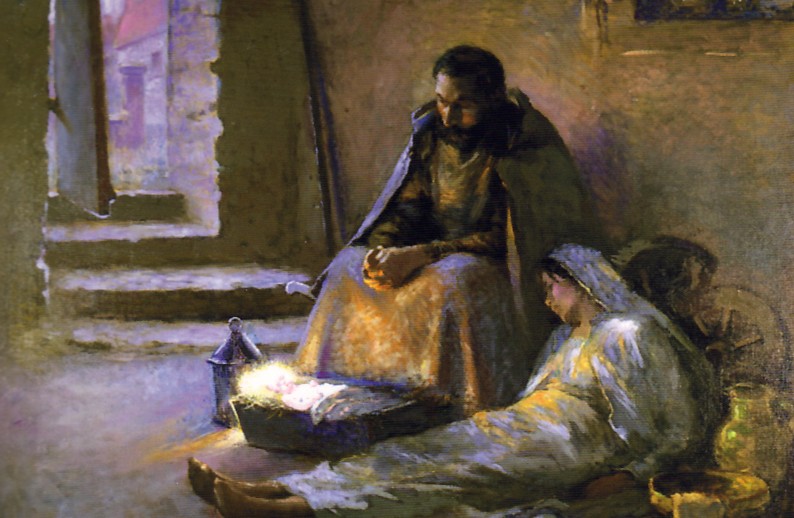
In the filthiest place in the world, a stable, Purity was born. He, Who was later to be slaughtered by men acting as beasts, was born among beasts. He, Who would call Himself the "living Bread descended from Heaven," was laid in a manger, literally, a place to eat. Centuries before, the Jews had worshiped the golden calf, and the Greeks, the ass. Men bowed down before them as before God. The ox and the ass now were present to make their innocent reparation, bowing down before their God.

There was no room in the inn, but there was room in the stable. The inn is the gathering place of public opinion, the focal point of the world's moods, the rendezvous of the worldly, the rallying place of the popular and the successful. But the stable is a place for the outcasts, the ignored, the forgotten. The world might have expected the Son of God to be born - if He was to be born at all - in an inn. A stable would be the last place in the world where one would have looked for Him. Divinity is always where one least expects to find it.

No worldly mind would ever have suspected that He Who could make the sun warm the earth would one day have need of an ox and an ass to warm Him with their breath; that He Who, in the language of Scriptures, could stop the turning about of Arcturus would have His birthplace dictated by an imperial census; that He, Who clothed the fields with grass, would Himself be naked; that He, from Whose hands came planets and worlds, would one day have tiny arms that were not long enough to touch the huge heads of the cattle; that the feet which trod the everlasting hills would one day be too weak to walk; that the Eternal Word would be dumb; that Omnipotence would be wrapped in swaddling clothes; that Salvation would lie in a manger; that the bird which built the nest would be hatched therein - no one would have ever suspected that God coming to this earth would ever be so helpless. And that is precisely why so many miss Him. Divinity is always where one least expects to find it.

If the artist is at home in his studio because the paintings are the creation of his own mind; if the sculptor is at home among his statues because they are the work of his own hands; if the husband-man is at home among his vines because he planted them; and if the father is at home among his children because they are his own, then surely, argues the world, He Who made the world should be at home in it. He should come into it as an artist into his studio, and as a father into his home; but, for the Creator to come among His creatures and be ignored by them; for God to come among His own and not be received by His own; for God to be homeless at home-that could only mean one thing to the worldly mind: the Babe could not have been God at all. And that is just why it missed Him. Divinity is always where one least expects to find it.

The Son of God made man was invited to enter His own world through a back door. Exiled from the earth, He was born under the earth, in a sense, the first Cave Man in recorded history. There He shook the earth to its very foundations. Because He was born in a cave, all who wish to see Him must stoop. To stoop is the mark of humility. The proud refuse to stoop and, therefore, they miss Divinity. Those, however, who bend their egos and enter, find that they are not in a cave at all, but in a new universe where sits a Babe on His mother's lap, with the world poised on His fingers.

The manger and the Cross thus stand at the two extremities of the Savior's life! He accepted the manger because there was no room in the inn; He accepted the Cross because men said, "We will not have this Man for our king." Disowned upon entering, rejected upon leaving, He was laid in a stranger's stable at the beginning, and a stranger's grave at the end. An ox and an ass surrounded His crib at Bethlehem; two thieves were to flank His Cross on Calvary. He was wrapped in swaddling bands in His birthplace, He was again laid in swaddling clothes in His tomb-clothes symbolic of the limitations imposed on His Divinity when He took a human form.

The shepherds watching their flocks nearby were told by the angels:

And this is your sign: you will find a baby lying wrapped in his swaddling clothes, in a manger.
-- Luke 2:12


He was already bearing His Cross - the only cross a Babe could bear, a cross of poverty, exile and limitation. His sacrificial intent already shone forth in the message the angels sang to the hills of Bethlehem:

Today in the city of David a deliverer has been born to you-the Messiah, the Lord.
-- Luke 2:11


Covetousness was already being challenged by His poverty, while pride was confronted with the humiliation of a stable. The swathing of Divine power, which needs to accept no bounds, is often too great a tax upon minds which think only of power. They cannot grasp the idea of Divine condescension, or of the "rich man becoming poor that through His poverty, we might be rich." Men shall have no greater sign of Divinity than the absence of power as they expect it - the spectacle of a Babe Who said He would come in the clouds of heaven, now being wrapped in the cloths of earth.

Only two classes of people found the Babe; the shepherds and the Wise Men; the simple and the learned; those who knew that they knew nothing, and those who knew that they did not know everything. He is never seen by the man of one book; never by the man who thinks he knows. Not even God can tell the proud anythingl Only the humble can find God!

Friday, November 30, 2007

Greatest American Rock and Roll Musicians

A Take on William's Post

Many, many years ago, there was a peculiarly American musical form called Rock and Roll...


A disclaimer: I like straight-up Blues better than Rock and Roll anyway, so my choices are likely to be weighted towards a certain era and towards guitar-based bands. More bands from the 50s should probably be on here, like Buddy Holly and the Crickets, and I’ve probably given the Punk bands from the 80s short thrift. I know I should rightly have bands on here like Nirvana, Metallica, and Soundgarden too, but to tell you the truth, I know next to nothing about them. In fact, I’ve found hardly anything worth listening to since the early 90s, so without further ado…

1. Elvis Presley The King. I’m sorry, you have to give it to him. With his bold crossover move, he essentially invented Rock and Roll. In addition, he really did have a great set of pipes. The caveat here is, all credit is due for that he did before he went into the army. Almost everything he did afterwards was awful. It’s hard to imagine anyone in any walk of life who was managed worse than he was, with the possible exception of Mike Tyson.

2. James Marshall Hendrix We talk about him a lot. There was a way that people played guitar before Hendrix, and there was a way that they played it afterwards, but nobody ever played it quite like him. That’s all there is to that.

3. Chuck Berry He was the paradigm for the guitar and for showboat antics for a decade before Hendrix. He set the standard and his influence lives on today.

4. Aerosmith The American version of the Rolling Stones, except they’ve been better in the long run. Steven Tyler has more talent than Mick Jagger (especially now), and Joe Perry has more talent than Keith Richards (especially now). They have the same kind of longevity that the Stones have had, but (just barely) have not shown the same kind of Picture of Dorian Gray effects… yet.

5. Bruce Springsteen Honestly, I’m not a fan. I recognize him as a great lyricist, I just wish he’d write them for someone else to sing and play. The only song of his that I really like is Fire. Enough people that I really respect, however, assure me that no one can put on a show like he can. I can’t deny the depth of his appeal.

6. Jackie Wilson ”Mr. Excitement”. This is my wild card pick. He had enormous influence on the guys who came after him on Motown and Stax. I think he was an incredible talent. Another guy who got on the junk and died too young. Here he’s shown below on “Shindig” doing Baby, Work Out. Here too, is an unexplainable animated piece based on his Reet Petite.


7. Bob Dylan When I think of Bob Dylan, I think “folk singer”. A guy who managed somehow to make a strength out of a poor voice. Not fair, I know… but I don’t automatically think of a Rock and Roll star. William made such a strong case for him, though, I have to give him a Top-Ten spot. He is another guy whose wide influence is undeniable.

8. James Taylor He’s not Rock and Roll either? He belongs on the list anyway. If you don’t believe me, you can argue about it with your wife if you want to.

9. Creedence Clearwater Revival These guys had a great run of hits, as William pointed out so well. I love John Fogerty’s distinctive, “swampy” style of vocals and guitar too… “I like the way you woke. I like the way you toke. I like the way you walk, I like the way you talk, Suzie Q.”

10. Ray Charles ”I say Hey… Ho…” He deserves to be on the list even if just for his version of America the Beautiful.

11. Santana These guys almost singlehandedly integrated Latino culture into the mainstream visibility of American life. Carlos Devadip Santana is a great player and a great ambassador. He genuinely seems to be a great guy, helpful to lots of other musicians over the years.

12. Sam Cooke Lots of fun, fun songs, delivered with vocals as smooth as ice cream. I posted about him once here.

13. The Allman Brothers I wanted to put The Band in this spot, but some of them were Canadians. The Allmans created the Southern Rock genre, and Duane Allman was the best slide player since Elmore James. Their Fillmore East show in 1971 featured Statesboro Blues and Must Have Done Somebody Wrong, which are two of the best live recordings I’ve ever heard.

14. Billy Joel He’s talented. You have to admit it. He’s sort of the Elton John or Paul McCartney of the USA, and you can take that however you like. He’s extremely versatile, although I’d still like to give him a smack for singing Only the Good Die Young at Providence College when he’d promised the friars that he wouldn’t.

15. Steely Dan Walter Becker and Donald Fagen weren’t the most pleasant guys in the world, but they always had the best of the sessions musicians working for them, like Jeff “Skunk” Baxter on Reelin’ In the Years, which brings me to…

16. The Doobie Brothers Just the Tom Johnston years, please! Not the Michael McDonald years… I state that most emphatically.

17. Bob Seger Some might consider this a strange choice… I think he was a great rocker and a great lyricist who put his multiple anthems into an easily accessible format for the public.

And I remember what she said to me
How she swore that it never would end
I remember how she held me oh so tight
Wish I didn’t know now what I didn’t know then

Against the wind
We were runnin’ against the wind
We were young and strong, we were runnin’
Against the wind

I think everyone has a way to relate to that in one way or another.

18. The Doors Truly unique. Somehow they build a new following with each generation that comes along.

19. The Talking Heads My nod to CBGB’s and the whole Punk/New Wave scene. For me, they were the best of that lot. I liked David Byrne’s sense of humor.

20. REM I regret that I didn’t really start to get interested in these guys until their popularity started to wane. A solid decade of making albums every year, each of which had at least one great song on it.

Bonus Choice: The B52s Well, maybe Rock Lobster, an old staple of college parties, was undanceable, as undanceable as the other songs it was inevitably sandwiched in between - Spirits in the Material World, and Rock the Casbah - but Love Shack, now THAT was a danceable tune…

Wednesday, November 28, 2007

The Reach

Wondering How Dan Fogelberg is doing...

William and Paula indicated that they were tired of looking at Putin-beefcake. Can't say I blame them. Can you? Let's try this... I might even get under William's skin even more... We're heading into the Christmas Season, and maybe it was William's Greatest American Rock and Roll Albums post, with some incidental (but well-justified) Eagles-bashing thrown in on the side, or maybe it was the fact that certain Christmas Season memories bring me back to the song Same Old Lang Syne, but something put me in mind of Dan Fogelberg, and I'm wondering how he's doing these days.


My college girlfriend was a BIG Dan Fogelberg fan, so naturally, I followed suit and became a fan too. It was certainly in my interest to do so. You all know how that dynamic works. She liked turquoise jewelry and Southwest art and all of that sort of thing too. What can I say? He was a pretty big star back in the seventies, running off a string of seven platinum albums in a row. Very talented guy. Good lyricist, proficient at harmonies, and adept at both piano and guitar. A lot of his songs were staples on soft-rock stations, but he could rock pretty well when he wanted to. A case in point is a number he wrote when he stayed true to being "green" just at a point in time when it was becoming unfashionable to be that way. From his album Phoenix, in the wake of the Three Mile Island accident, Face The Fire:

Face the Fire

Face the fire
You can't turn away
The risk grows greater with each passing day
The waiting is over
The moment has come
To kill the fire and turn to the sun

They'll take your money
And then take your health
To line their pockets with unequalled wealth
These men are under the power of gold
We won't be safe until we shut them down cold


His career hit a peak with the double-album The Innocent Age in 1981. I saw him in an "alone and acoustic" concert at the Worcester Centrum in 1982. He was great. I'd put that perfomance right up there with any show I've ever seen.

Bottom line: Women really, really went for this guy, and men always had a certain sense that he was playing that up for all it was worth. Nevertheless, I'm a fan...

Jimi Hendrix and Dan Fogelberg... The musical patron saints of the aging Vatican II generation. TM

From wiki:
On the September 25, 2006, episode of the NBC show Late Night with Conan O'Brien, O'Brien concluded his discussion of the controversy over Pope Benedict's public use of a statement by a 14th century Byzantine emperor, and singer Cat Stevens' reaction to the remarks, with the punchline: "So far, no word yet from Dan Fogelberg. [light laughter, then a pause] He was a singer back in the 70s."
Seriously speaking, though... I was very saddened and disappointed to hear a couple of years ago that he was diagnosed with advanced prostate cancer in 2004 and stopped touring and making albums. He underwent hormonal treatments, and went into partial remission. He has an update on his website, but it's quite dated. I don't see any news out there that's very recent. I really do hope that he is doing well.

He had a lot of hits from The Innocent Age, but my favorite song on that album is one that didn't get as much attention. In The Reach, I though he did a pretty good job of capturing the flavor of the state of Maine, as far as it was possible for a guy from Peoria to do.

The Reach

It's Maine, and it's Autumn, the birches have just begun turning
It's life and it's dying
The lobstermen's boats come returning
With the catch of the day in their holds
And the young boys cold and complaining
The fog meets the beaches and out on the Reach it is raining
It's father and son, it's the way it's been done since the old days
It's hauling by hand ten miles out from the land where their chow waits
And the days are all lonely and long and the seas grow so stormy and strong but...
The Reach will sing welcome as homeward they hurry along

[Chorus:]
And the morning will blow away as the waves crash and fall
And the Reach like a siren sings as she beckons and calls
As the coastline recedes from view and the seas swell and roll
I will take from the Reach all that she has to teach to the depths of my soul

The wind brings a chill, there's a frost on the sill in the morning
It creeps through the door
On the edge of the shore ice is forming
Soon the northers will bluster and blow
And the woods will be whitened with snowfall
And the Reach will lie frozen for the lost and unchosen to row

[Chorus]

Also, in memory of a college classmate from Maine who was lost at sea...

They that go down to the sea in ships, that do business in great waters; These see the works of the LORD, and his wonders in the deep. For he commandeth, and raiseth the stormy wind, which lifteth up the waves thereof. They mount up to the heaven, they go down again to the depths: their soul is melted because of trouble. They reel to and fro, and stagger like a drunken man, and are at their wits' end. Then they cry unto the LORD in their trouble, and he bringeth them out of their distresses. He maketh the storm a calm, so that the waves thereof are still. Then are they glad because they be quiet; so he bringeth them unto their desired haven.

--Psalms, 107:23-30

Saturday, November 24, 2007

The Return of Stalinism?

Nostalgia is on the rise for the Soviet Union in Putin's Russia


I... don't even know how to caption this...

I looked the man in the eye. I found him to be very straightforward and trustworthy. We had a very good dialogue. I was able to get a sense of his soul; a man deeply committed to his country and the best interests of his country. And I appreciated so very much the frank dialogue.
--George Bush, on meeting with Vladimir Putin

You looked into his eyes and saw his soul? George, the man was a KGB agent. He leads a neo-KGB state. If he even has a soul, it's as black as two feet down a wolf's gullet. What, I wonder, did he see behind your eyes?

The cells of the smaller prison at the Lubyanka were full to overflowing. The new arrivals were shoved out into the corridor, where a crowd had been standing for several days. It was so jammed that if you took your hand out of your pocket, you couldn't get it back in. There were two children here as well, girls of twelve and thirteen. The prisoners took turns resting. Among those lying on the floor was an Italian Communist. Young and attractive.

She said in French, "You've had a fascist coup."

"That's not right," they answered her.

"What else if they're arresting Communists?"

"What are you saying? The Communist Party is still in power."

The Italian woman turned up her almond-shaped eyes. "Why are you trying to trick me? This is a fascist coup for certain. I know what one looks like."

--The Lubyanka Prison, Moscow 1936 (from Anton Antonov-Ovseyenko's The Time of Stalin: Portait of a Tyranny)


In the heady days of the late 80s and early 90s, I recall the sunny optimism held by everyone, from the one-hit-wonder band Jesus Jones to the philosopher Francis Fukuyama speaking of "the world waking up from history", and our witnessing "the end of history". Democracy had won, and totalitarian systems were being relegated to the trash-heap of history once and for all.

By this time, we had as a nation rather thoroughly bought into the neo-con (perhaps more properly called neo-liberal, or classically-liberal) notion that free markets mean freedom, period. The dogma taught that once people tasted the freedom associated with a free market enterprise system, that it would be impossible for an authoritarian regime to keep the lid on the demand for political freedom on behalf of that economically-emancipated population, and that democratic institutions would naturally evolve as those authoritarian regimes collapsed under the pressure.

It might be true to a certain extent, but we've seen great disappointments in the aftermath. As I've stated here previously, we've seen that free markets do not necessarily need political freedom in order to work. It appears that all they may need is some form of stability. Russia and China are cases in point. Historians may wind up saying that the manner in which the West handled the break-up of the Soviet Union and the Eastern Bloc may turn out to represent a colossal failure in both policy and imagination.

Using economic shock therapy techniques, those who engaged Russia in the early years after the breakup advised draconian methods of privatization and the wholsale sell-off of state industries before Russia had developed the rule of law and an efficiently functioning parliamentary system. I won't even get into the topic of whether or not nuclear stockpiles were adequately safeguarded. In addition, on the international stage, Russia was often treated as a marginalized power. They started to feel surrounded again.

The result of this was that the cadre who ran the Communist system merely became the new masters of business and industry in Russia. The nomenklatura, the apparatchiks who had been priviliged Communist Party members before, merely continued in their old ways of theft and Russia became a sort of mafia-run state. An oligarchy evolved into a outright kleptocracy. It was too much chaos for the population to handle, especially one that had never been encouraged to be self-sufficient. The natural reaction of people oppressed under such as system is to retreat back into totalitarianism and the spell of fascistic demagogues. People look for a strong-man to curb the chaos and to set matters right.

When I was young, we thought that progress was inevitable and irreversible. Seriously. Growing up in the 60s, we were brought up to believe, despite the existence of war, nuclear weapons and difficult social problems, that with faith, freedom, science and good will, the fate of all mankind would eventually improve. In the decades since, we see that the evolution of civilizations is not always going to move in a forward direction. There will be some regression at times. There will be times of devolution and a return to primitivism. Progress can't be taken for granted.


As the cradle-to-grave security net (however meager it was) was shredded in Russia, and promised pensions weren't getting paid reliably, the nostalgia for the days of the old Soviet Union arose. Today's impotence in international affairs is contrasted unfavorably to what they consider the greatest achievement in Russian history, their victory in "The Great Patriotic War" against the Nazis in world War II.


Polonium-poisoned Alexander Litvinenko.

So what is Putin up to in Russia? Is Russia governed by industrialists, political parties, the Russian Mafia, or a club of ex-KGB officers? Putin is on record calling the collapse of the Soviet Union "the greatest geopolitical catastrophe of the century." Worse than World War I? Worse than the famine under Lenin, the mass-starvation of Ukrainian Kulaks, and the miseries caused by forced collectivization and the purges of the "Great Terror"? Worse than World War II? Worse than the creation of the Soviet Union itself? Newly approved school textbooks describe Joseph Stalin as "the most successful Soviet leader ever." Former Soviet premier and ex-KGB chief Yuri Andropov's statue has been re-installed at the Lubyanka, and Andropov's birthday has been officially celebrated. Add in... The absolute crushing of Grozny and large parts of Chechnya... Ham-handed rescue attempts at Beslan and the Moscow Opera House killing scores of civilians, showing blatant disregard... The shutting off of oil pipelines to Russia's neighbors... The polonium poisoning of the dissident and Putin-opponent Alexander Litvinenko... The dioxin poisoning of Ukrainian presidential candidate Viktor Yushchenko... Hints that Putin might stay past the end of his presidential term...


Viktor Yushchenko... Before, and after

In her long and tragic history, has Russia come to need Tsars?


Joseph Stalin thought so. Here is an excerpt from a passionate and riveting book by Anton Antonov-Ovseyenko (whose father was a Bolshevik who led the storming of the Tsar's Winter Palace), The Time of Stalin: Portrait of a Tyranny:

In 1904 the young Bolshevik Sergei Basist was carrying on agitation among the sailors of Sebastopol. One of them asked him: "You say that under socialism everyone will be equal. But what if some bigwig like Tolstoy or someone even bigger decides he wants to take all the power for himself? What then?"

Basist hadn't expected a question like that, but he had no trouble answering it. Under socialism, he explained, leaders would be chosen in nationwide public elections. Therefore a personal dictatorship could not arise. Besides, who would let it happen? "Here you are, navy men, for example, the sons of workers and peasants. You're not about to saddle yourselves with a new tsar, are you?" The sailors laughed.

Thirty years later Alyosha Svanidze, brother of Stalin's first wife, was working as a deputy to the director of the State Bank. On Sundays it was the Gensek's (Stalin’s) habit to play billiards with Svanidze. One Monday Alyosha arrived at his office on Neglinnaya Street in a very depressed mood.

"What's wrong, did you lose at billiards yesterday?" an old friend asked him.

"What sort of monster do you think I am? If I won one game, he'd take it out on innocent people for the whole next week."

Svanidze was silent for a while, then spoke further.

"I just can't get over it. I couldn't sleep all night. Do you know what the Boss came out with? He chalked the tip of his cue and set it on the table. Then he said: `You know the Russian people is a tsarist people. It needs a tsar.' That remark unnerved me completely. I couldn't finish the game. I just left. I'm not going to set foot in his presence again. I think that, without meaning to, he spoke his innermost, secret thought just then. Watch and see, he's got something in the works."

Two hundred years earlier, Russian peasants who dreamed of having a just lord and master over them proclaimed Yemelyan Pugachov tsar. They called him "Little Father," and later "Emperor."

"All that he does is just, like the deeds of a deity, for the Russians are convinced that the Great Prince of Moscow performs the Will of Heaven." Quoting this observation of Herberstein's, the Marquis de Custine added his own comment: "I do not know whether the character of the Russian people produced rulers like this, or whether such rulers produced the character of the people."' The author of Nikolaevan Russia thought like a dialectician.

The first part of this formulation was brilliantly confirmed in the second quarter of the twentieth century, when the Soviet people began to deify a being with hardly more than an inch of forehead, and a pipe, always lit, held between two rows of black teeth. A little earlier, just before the revolution, wasn't Russia ready to see the reincarnation of Jesus Christ in a former horsethief, Grigory Rasputin? Wasn't Stalin of the same stock?

In studying the Gensek's gloomy interior, we cannot overlook Erich Fromm's contention that the lust for power is the most typical manifestation of sadism. For Stalin this wasn't some sort of irrational lust, some desire to become the richest man on earth. He needed power as a means of subjugating or crushing other people...

Among the innumerable figures of prominence in history it is hard to find one that so single-mindedly pursued personal power. In Stalin's hands power became a means of sadistic satisfaction and diabolic abuse of his subordinates, the party, and the people. Power meant omnipotence to him. As long as he had power, the rest-ideas (which were all phony to him) and both ends and means (for him any means were permissible)-all of that was secondary. As soon as he got his first taste of power, during the revolution, he could no longer stop himself. "Power corrupts and absolute power corrupts absolutely." This saying does not apply to Stalin; he was absolutely corrupt even before he seized power.

--The Time of Stalin: Portait of a Tyranny


Ivan the Terrible and His Son Ivan on November 16, 1581, by Ilya Repin (1885)

Is it the Cultural Sink, or Power?

Is it cold comfort to be compared to other institutions?

In the recent meeting of US Bishops, a preview was given of an ongoing study investigating the causes of the sexual abuse crisis, suggesting that what happened in the Church mirrors what is occurring in society as a whole.
On the sexual abuse crisis, the bishops heard preliminary findings from a $2 million study on the “causes and context” of the scandals by the John Jay College of Criminal Justice in New York. Early results appear to suggest the crisis mirrored broad patterns in American society, such as the sexual revolution of the 1960s, rather than arising from unique forces within the church. “This is in conflict with the idea that there is something distinctive about the Catholic church that led to the sexual abuse of minors,” Karen Terry, a researcher with John Jay College, told the bishops.

Speaking after the session with the bishops, Margaret Smith of John Jay College said that while the researchers do not have hard data on sexual abuse in other institutions, nothing they’ve seen suggests that the problem has been proportionately worse in the Catholic church than in other sectors of society.

While many bishops appeared to welcome the findings, a few warned that they offer no more than cold comfort.

“It’s a bit like my doctor telling me that my cancer is no worse than my hospital roommate’s cancer. ... Our situation should be much better,” said Bishop Robert Conlon of Steubenville, Ohio.
Victims groups were not pleased with the findings of this study. Neither was priest, sociologist, and columnist Andrew Greeley, and it's worth noting that he has not always been on the same page as the victim's groups. Here was his take on it in his latest column, Researchers Miss Cause of Abuse:
The team searching for an explanation of pederasty gave a verbal preview of their findings to be reported in full later in the year. The cause of the problem seems to be change in sexual morals and media imagery. The bishops will love that and so will the Vatican -- a cause of the problem that is external to the Church. Blame the people for their sexual mores and the media for their exploitation of the human body, not why so many bishops denied the problem for so long.

The writer who has the best insights on the problem is a professor of sociology from Purdue, Anton Shupe. He argues (his most recent book is Spoils of the Kingdom) that the explanation for abuse is not psychological but sociological, neither homosexuality nor celibacy, but sociological -- power. Routinely the strong abuse the weak if they think they can get away with it (in all five of the denominational situations on which he reports). You desire the money that often seems to be lying around inviting theft, you desire the young body that is available to you by reason of your sacred power. Because no one seems likely to stop you, you take what you want, whether you're married or not and whether you are straight or gay. This abuse of the weak -- young or older -- by those with power (and especially sacred power) is part of the human condition and always has been. It will be stopped only when those in power restrain their partners in power (clergy, teachers, cops, doctors, etc.) from such abuse.

Tuesday, November 20, 2007

Thanksgiving


A Service in the Common House at Plimouth Plantation, 1621
From Pilgrim Hall Museum, Plymouth MA


Here's wishing everyone a Happy Thanksgiving.


P.S.

The day a Jesuit visited Plimouth for a Friday fish dinner...

and

St Thomas Aquinas weighs in on...

WHETHER IT IS FITTING TO BRINE THE BIRD BEFORE THE THANSKGIVING FEAST?

We proceed with the first article:-

Objection 1: It would seem better to ensure moisture and flavor by stuffing it under the skin with butter, herbs and spices.

Objection 2: It would seem better to roast the turkey at a steady low heat or at high heat and then low heat, or other temperature combinations;

I answer that: The best tenderness and moisture is achieved by soaking it overnight in a seasoned saltwater solution before cooking.

Middle-Aged Workout

On Learning to Come to Terms with the Need to Age Gracefully...

A Woman's Story

(from an email forwarded to Anne from a friend the other day)

Dear Diary,

For my birthday this year, my daughter (the dear) purchased a week of personal training at the local health club for me.

Although I am still in great shape since being a high school football cheerleader 43 years ago, I decided it would be a good idea to go ahead and give it a try.

I called the club and made my reservations with a personal trainer named Belinda, who identified herself as a 26-year-old aerobics instructor and model for athletic clothing and swim wear.

My daughter seemed pleased with my enthusiasm to get started! The club encouraged me to keep a diary to chart my progress.

MONDAY:

Started my day at 6:00 a.m. Tough to get out of bed, but found it was well worth it when I arrived at the health club to find Belinda waiting for me. She is something of a Greek goddess -- with blonde hair, dancing eyes and a dazzling white smile. Woo Hoo!! Belinda gave me a tour and showed me the machines. I enjoyed watching the skillful way in which she conducted her aerobics class after my workout today. Very inspiring! Belinda was encouraging as I did my sit-ups, although my gut was already aching from holding it in the whole time she was around. This is going to be a FANTASTIC week!

TUESDAY:

I drank a whole pot of coffee, but I finally made it out the door.

Belinda made me lie on my back and push a heavy iron bar into the air then she put weights on it! My legs were a little wobbly on the treadmill, but I made the full mile. Belinda's rewarding smile made it all worthwhile. I feel GREAT! It's a whole new life for me.

WEDNESDAY:

The only way I can brush my teeth is by laying the toothbrush on the counter and moving my mouth back and forth over it. I believe I have a hernia in both pectorals. Driving was OK as long as I didn't try to steer or stop. I parked on top of a GEO in the club parking lot.

Belinda was impatient with me, insisting that my screams bothered other club members. Her voice is a little too perky for early in the morning and when she scolds, she gets this nasally whine that is VERY annoying. My chest hurt when I got on the treadmill, so Belinda put me on the stair monster. Why the Hell would anyone invent a machine to simulate an activity rendered obsolete by elevators? Belinda told me it would help me get in shape and enjoy life. She said some other s*** too.

THURSDAY:

Belinda was waiting for me with her vampire-like teeth exposed as her thin, cruel lips were pulled back in a full snarl. I couldn't help being a half an hour late, it took me that long to tie my shoes.

Belinda took me to work out with dumbbells. When she was not looking, I ran and hid in the restroom. She sent another skinny b**** to find me

Then, as punishment, she put me on the rowing machine -- which I sank.

FRIDAY:

I hate that b**** Belinda more than any human being has ever hated any other human being in the history of the world. Stupid, skinny, anemic, anorexic little cheerleader. If there was a part of my body I could move without unbearable pain, I would beat her with it.

Belinda wanted me to work on my triceps. I don't have any triceps! And if you don't want dents in the floor, don't hand me the damned barbells or anything that weighs more than a sandwich. The treadmill flung me off and I landed on a health and nutrition teacher.

Why couldn't it have been someone softer, like the drama coach or the choir director?

SATURDAY:

Belinda left a message on my answering machine in her grating, shrilly voice wondering why I did not show up today. Just hearing her made me want to smash the machine with my planner. However, I lacked the strength to even use the TV remote and ended up catching eleven straight hours of the Weather Channel.

SUNDAY:

I'm having the Church van pick me up for services today so I can go and thank GOD that this week is over. I will also pray that next year my daughter (the little s***) will choose a gift for me that is fun -- like a root canal or a hysterectomy.

I still say if God had wanted me to bend over, he would have sprinkled the floor with diamonds!!!

A Man's Story

(taken from The Best of Bad Hemingway: Choice Entries from The Harry's Bar & American Grill Imitation Hemingway Competition)

A Lean Well-Tighted Space

It was early and those in the exercise room were still in the aerobic dance class except for a man older than the others who sat at the Nautilus machine for bulking up the pecs. On the wall was a poster of the great Stallone. The great Stallone's skin glistened with oil and his pecs bulged like the backs of boxer's gloves and his abs rippled like two croissants pushed together. The man was sweating but his skin did not glisten and his pecs did not bulge. He sat breathing hard for several seconds and then got up and wiped his face with a towel and walked to the machine for making the abs ripple. He walked holding his stomach in and tried to look at the aerobic dancers without turning toward them.

An attendant across the room spoke to another attendant who was adjusting the sound system.

"We ought to stop him from coming here."

"He's all right."

"It is a thing of concern to the girls. They come here to meet young men. They do not like to look at an old man. They do not like an old man looking at them."

"He's not so old."

"He must be forty-five at least."

"A man of forty-five may still like to look at girls."

"Let him go to the `Y.'"

The second attendant shrugged. He finished with the sound system and began to check the bulbs in the panel of colored lights. It is not the same, he thought. Here the girls are lean and wear tights cut high to show the body on both sides of the groin. The girls at the "Y" have thick bodies and wear baggy sweat pants and are not good to look at like the girls one sees here at Harry's Bar & American Grill. A man should be able to choose his own space. It is important that the girls be lean and well-tighted.

The man finished with the last machine and picked up his towel and walked toward the showers. He walked like a man of forty-five but with dignity. He passed a group of girls wearing tights cut very high. He looked at the girls. The girls did not look at the old man.

It is all body, the second attendant thought to himself. Body y pues body. Our body who are in body. Body be thy name. Hail body full of body, body is with thee. Pues body. Pobre Viejo. There must be many like that.

-- Fred D. Baldwin

Friday, November 16, 2007

Kudos and Thanks to the Little Sisters of the Poor


Photo from Cardinal Seán O'Malley’s Blog:
Cardinal Seán with the Sisters
at the Jeanne Jugan Residence


Have you ever walked into a nursing home and been immediately rocked back onto your heels by the smell... That unmistakable smell that is a melange of burned food, disinfectant, excrement, sputum, and decay? Have you ever walked into one and heard the lonely cries and the blaring TVs? Have you seen the disinterested staff and the residents left slumped over semi-conscious in wheelchairs in the hall?

Not so, not in the home for the elderly poor run by the Little Sisters of the Poor in Somerville. It is spectacularly clean, pleasant, well-heated and lit, full of activity and tender care ministered by the sisters, many of whom are quite elderly themselves. Their special charism, based upon that of their foundress Blessed Jeanne Jugan, is to tend to the elderly poor, and to show them attention, compassion, dignity and meticulous care, all the way until natural death. Says the Mother Superior of the house, Mother Celine Vadukkoot, "We refute euthanasia and put great value in doing all that we can to respect and protect their life… until God calls them to death.”


Mother Celine Thérèse Vadukkoot,
with a couple of the residents


Last year I put up a post about my daughters and some of their friends who work as volunteers in the home. They call themselves the Jeanne Jugan Juniors. One Saturday a month, they go in to work with the elderly and to provide companionship for them. Mother Celine is a holy, forceful, and dynamic woman. She is not one to say "no" to, nor would you even want to. If Mother Celine asks people to jump, people ask how high... Furthermore, if you have a family member in residence, Mother Celine will remind you if you haven't been by to visit for a while, and if she doesn't, someone else will.

A couple of mornings ago, at approximately 3:30 AM, my wife's great-aunt passed away at the Jeanne Jugan residence, about two weeks shy of her 98th birthday.

They made sure that Anne was there in time, along with a bevy of the sisters, who tirelessly and faithfully stuck with Aunt Helen with their prayers and ministrations until the very end. Anne even was able to take a bit of humor out of it, noting that it may have been possible that Aunt Helen was drowned under all of the Holy Water that was being sprinkled on her. Said the Irish-born Sister Marcel, "Ah, well y'know, it keeps the devil away... He's always hanging around, looking to snatch souls right until the last minute.... Didja see how she went up to heaven when we finished that last Hail Mary?" Yes, thought Anne, but perhaps not cooincidentally, as the sisters had been praying the Rosary and the Chaplet of Divine Mercy relentlesly and non-stop for hours. :-)

I joke a little bit, but God Bless them. Helping people to gracefully exit from this world, loved and not alone, is what they do, and they do it very well. The sisters are wonderful, and we thank them and praise them for everything they do. Please pray for them, for their vocations (they've had quite a few lately), and for the soul of Aunt Helen.

Scenes from the life of Blessed Jeanne Jugan

Monday, November 12, 2007

Tagging Myself For a Meme

The So-Called "Extraordinary" Meme

I'm tagging myself for this meme for two reasons. The first is that I would never be tagged for it otherwise. You see, the originators and devotees are waiting for people like me to "die off" before they would ever consider it.

Second... There really wasn't anything wrong with this meme in principle, but it took a nasty twist at the end, and I'd like to stick up for the maligned individual in question. I don't know if the last question was on the original meme or not, I think it was an accretion, but it epitomizes the ugliness, chortling malevolance, and mean-spiritedness that has unfortunately become the dominant characteristic of the posts and combox responses to be found in the Catholic blogging world today. It sickens me.

As I alluded earlier on Crystal's blog, I'm sick and tired of people who are still wet behind their ears from their chrismation presuming to tell people who've lived their entire lives in the faith what authentic Catholicism is and what it is not.

I'm also frustrated by all these young traditionalists, "re-discovering" their Catholicism on some apologetics website within the last two or three years imagining a so-called Golden Age prior ot Vatican II, either trashing the Second Vatican Council outright, or giving it the most tepid endorsement possible, characterizing it as a sort of failed "pastoral" council that didn't change any dogma thank goodness, and should be quietly jettisoned. Another variant urges people to look at the "letter" of the Vatican II texts rather than the "demonically-inspired 'Spirit of the Council'". Anyone old enough to remember, on the other hand, who actually happened to be around in those years, is spurned as a gray-haired liturgical-dancing loving fogey who presided over the "ruin" of the Church, which is lying in shambles, and waiting for the young traditionalists to fix it. The fogeys are urged to die off as soon as possible.

It's more likely that the young trads will shrink it down to a curious museum piece, if they get their way.

The truth of the matter is, every single indicator that worries them so much was already present in the years before Vatican II. Europe was already in a crisis of faith. That's why the Council was held. That's why Henri de Lubac, a peritus at the Council, wrote The Drama of Atheistic Humanism, seeking to explore why the Church had already lost the hearts and souls of so many of the faithful. As for the US, it was living a hermetically-sealed ghetto Catholicism in a hostile Protestant society. Once Catholics became educated, affluent, and mainstream, those very elements, along with the secular upheavals in the sixties and seventies themselves, contributed to leading us where we are today.

The young radtrads cry, "Look at the wreckage in the Church after Vatican II! Wow! Great idea that was! What fruits of the Council! It's Springtime!"

I answer, "World War I - 9.7 million military deaths, and 10 million civilian deaths. World War II - 25 million military deaths and 50 million civilian deaths... Yes, It was Summertime before Vatican II!" That's not counting all the other wars around the planet in the Twentieth Century. What kind of Christian continent was that? That Latin Mass certainly was a panacea for everything that was ailing Western Civilization, wasn't it? It certainly was doing the job, obviously.... If anything, the Council was held about 10 years too late, putting it up against the perfect storm of the sixties.

As for these youngsters who are bitter about their whiffle-catechesis while growing up, angry that all they got in their classes was word-search puzzles and smiley-faces, I hear you excorciating the nuns and laywomen who taught you. Well, I remember how difficult is was for them to educate the spoiled brats in your generation, because you had no manners and you had no attention span for anything much deeper. Don't blame those educators for your woeful lack of knowledge. If you were brought up without the Faith in your households, it was the fault of your parents, not the fault of the educators who worked their hearts out trying to get through to you. Just because you're jealous of the vitality of Evangelical Protestantism in comparison to how you view Catholicism these days, don't blame the educators. Look closer to home. Truth is, your parents likely checked out with Humanae Vitae (when Paul VI listened to his curial mandarins instead of the laity) , which is why you weren't brought up like they were themselves.

I consider myself to be in neither the traditionalist nor the liberal camp. I must say, however, that I can certainly understand the frustration on the part of progressives in recent decades. I don’t have a problem with Latin. I don’t have a problem with the historical legacies of our Church, although I do agree with traditionalists that Vatican II was in fact a revolution. It was not a revolution in the sense that they mean it, in that the values of the French Revolution infected the Church. It was a revolution in the sense that the assembled bishops finally stood up like men and acted like real bishops, and were not cowed by the coterie of extreme anti-modernist integrists in the Roman Curia who equated the Church with themselves. The bishops had the support of the Pope in that regard, at least with John XXIII. The Curia has been fighting a rear-guard action in a restorationist effort ever since. The Curia was never reformed as it should have been. They just waited for the bishops and the theologians to go home, then it was back to business as usual. Now that the Church is in a mess, they point the accusing finger at others rather than themselves, casting aspersion and blame on the very council they worked so hard to scuttle.

I understand the frustration of progessives on matters related to the liturgy in particular, because a lot of this was SSPX-driven, and there is a lot more wrong with the SSPX than the illicit consecration of a handful of bishops in defiance of the Pope. In addition to their non-acceptance of the Council is their obnoxious anti-semitism (which should be roundly condemned by all Catholics everywhere) and their inane, crackpot theories around Judeo/Masonic/Communist plots. These Jansenists are still obsessed with the French Revolution and the Ancien Regime. These are the people Benedict is extending an olive branch to, while progressives, concerned about more lay involvement in the governance of the Church, a wider role for women, a reconsideration of mandatory celibacy, and a recognition of positive aspects of Liberation Theology, are shunted to the side, or investigated, censured and disciplined.

Anyhow, here's this meme...

1. Do you attend the Traditional Latin Mass or the Novus Ordo?

That's the Missal of Blessed John XXIII and The Missal of Paul VI, please! Partisans of the Latin can use TLM if they wish (so we can refer to it that way here), but please refrain from using the pejorative term "Novus Ordo".

I attend the Rite of Paul VI. I attended the Latin Mass for the first 10 years of my life. That was enough.

As I said above, I have nothing against Latin, or Gregorian Chant, or the Mass as it was heard by our beloved saints for centuries. Unfortunately, however, the Latin Mass has become a politicized tool in the hands of Vatican II recusants and traitors, and those who believe the least in liturgical diversity. Putting it in their own manner of speech, I'll go extreme and militant.... Enemies of Vatican II are enemies of the Catholic Church. Enemies of the Catholic Church are enemies of God. Enemies of God are my enemies... Sorry to paint with a broad brush, I'm sure most of the attendees of the Latin Mass are reasonable people who attend both rites, but there are enough schismatics in the ranks for me to not want to share pews with them. I guess we won't have to be bothered by each other's company at Mass any longer. I've read too many stupid commentaries on the "invalid Novus Ordo, clown masses, liturgical dance, beer and pizza eucharist, altar girls, communion in the hand", and other apocalyptic nonsense out on the blogs to want to be associated with this.

The last time I attended a Latin Mass was about 10 years ago in Binghamton, NY. My wife had $80 dollars stolen out of her purse when she went up to Communion. That never happened to her at the "Novus Ordo". Would it be fair for me to characterize what happened there to us with the Latin Mass and its adherents in general? Of course not, but this guilt by association is what happens with the Paul VI Rite all the time with every liturgical abuse horror story.

Therefore, I will never attend another Latin Mass.

Ever.

In fact, I'm going to have it written into my will that a Latin Mass cannot be said for my funeral, even if it has become the "ordinary" form by that time, rather than the "extraordinary" form, which is what this Sri Lankan bishop would no doubt like to see.


2. If you attend the TLM, how far do you drive to get there?

Mary Immaculate of Lourdes in Newton Upper Falls is only 1.6 miles from my home. When Holy Trinity, which had been the home for the indult previously, was slated to close, Mary Immaculate became the new home for the Latin Mass community, although MI had been originally slated to close as well. I have attended masses at Mary Immaculate in the past. I have no intention of doing so in the future. Those who attend the Latin Mass are mostly outsiders to the parish.

3. If you had to apply a Catholic label to yourself, what would it be?

Just "Catholic" is good enough. According to Beliefnet's What Kind of Catholic Are You quiz, I scored 71, which is "Divine Office (Moderately Traditional)".

4. Are you a comment junkie?

I don't even know what that means. All things should be done in moderation. It isn't good to be a junkie about anything.

5. Do you go back to read the comments on the blogs you’ve commented on?

Of course.

6. Have you ever left an anonymous comment on another blog?

Only if there was a technical issue preventing me from posting as myself, or if there was a new type of blog that required me to sign up all over again, and get onto another spam list. I always say who I am.

7. Which blogroll would you most like to be on?

Joseph O'Leary's Spirit of Vatican II

8. Which blog is the first one you check?

Mine.

9. Have you met any other bloggers in person?

No.

10. What are you reading?

It's always posted on the right.

11. Has your site been banned by Spirit of Vatican II?

I sure hope not! See # 7 above!

Friday, November 09, 2007

Pope Benedict Roundup

The Future's So Bright... He's Gotta Wear Shades?


We all knew that Pope John Paul II was voluminous in his writings and indefatigible in his non-stop travels, even when he was ill and frail. Many people thought his output and his schedule would be hard to match. I have to admit, however, that I'm really impressed by the workload that B16 is able to put in for a man his age. He never stops. If you look him up in the news, there is always this matter or that matter that he is writing about or giving a speech on. He also comes up with some really unique and innovative ideas on whom he chooses to meet with. Hardly a topic exists out there that he doesn't weigh in on. He's certainly gives truth to the old stereotype of the hard-working German. If you like him or if you don't like him, you have to at least give him his props for that.

B16 Meets with the Saudi King


Here is a report about the recent meeting between Pope Benedict and Saudi Arabia's King Abdullah. The Pope and the bishops have been concerned for quite some time about the rights of Christians to worship freely in the Saudi Kingdom and other areas of the Middle East, pointing out a need for reciprocity in relations between Muslims and Christians, particularly when it comes to religious freedom. According to the article...
In an interview with Reuters on the eve of the meeting, the bishop in charge of Catholics in Saudi Arabia called on the country to guarantee more freedom and security for minority Christians and allow more priests in to minister to the faithful.

"What I am hoping is that there can be more security and freedom for our people in a very low profile manner," said Bishop Paul Hinder, a Swiss national who is based in Abu Dhabi... "I am not expecting to be able to build a cathedral. But at least (we need) the freedom to worship in security."
As we all remember from last year, there was quite a stir when Benedict gave a speech at Regensburg and quoted Byzantine emperor Manuel II Paleologus as saying,
Show me just what Muhammad brought that was new, and there you will find things only evil and inhuman, such as his command to spread the sword by the faith he preached.
Apparently, this meeting was cordial, and a group of Islamic scholars recently sent a letter to Benedict, looking for a dialogue, but when the Pope and the Saudi King exchanged gifts, the Saudi King gave Benedict... um... well, he gave him a jewel-encrusted... sword.

B16 Weighs in on the Rights of Labor

I read a column by George Weigel a couple of months ago that really got under my skin. It was called Lord, please don’t hear this prayer. Here is an excerpt:
A while back, I noted with a touch of asperity that the “Prayer of the Faithful” too frequently deteriorates into serial sermonettes, an AmChurch innovation without foundation in the Church’s liturgical tradition. I was particularly scornful of petitions that politicize the liturgy by promoting, as self-evidently desirable objects of the Lord’s attention, various planks in the Democratic platform. The same objection would, of course, apply to petitions drawn from the Republican playbook; but given the ambience from which most mass-produced liturgical “aids” emerge these days, that’s not likely to be a big problem any time soon.

It is, perhaps, an unhappy indicator of this column’s influence that things on the petition front have arguably gotten worse. Moreover, numerous readers have asked me to revisit the issue, so here we go again. Try these two gems, to which I was recently subjected; they were taken from a canned set of petitions for weekday Mass:

“For a transformation of world vision which will put the needs of human beings before capital gain and create policies which manifest Jesus’s love for the poor, let us pray to the Lord...”

“For the leaders of the United Nations, may they effectively design programs to provide aid to the people who experience the greatest suffering, let us pray to the Lord...”

I trust the Lord wasn’t listening.

The first petition cited is soft socialism masquerading as intercessory prayer. It ignores the fact that incorporation into global markets is the key to economic development and the empowerment of the poor, as post-World War II western Europe and Japan, Singapore, Hong Kong, Taiwan, South Korea, post-Cold War east central Europe, and now India demonstrate. In his 1991 encyclical, Centesimus Annus, John Paul II stressed that the moral obligation of the wealthy is to bring the global poor into those “capital-gain” driven networks of productivity and exchange that our petition-writer deplores. So why set “capital gain” over-against “Jesus’s love for the poor,” as if the two were mutually exclusive?
First of all, is this what we've come to? The term "AmChurch" used to be an obnoxious epithet used by the most extreme of radical traditionalists and schismatics. Now we've gotten to the point where it gets used by "reasonable" conservatives?

Well, in this rather snarky article in the Economist, Supererogation stops here, we read about Benedict weighing in on the rights of labor and the responsibilities of employers, squarely in the tradition of Leo XIII.
Contracts that do not ensure stable employment, said the pope, are among the “ethical and social emergencies capable of undermining the stability [of society] and seriously compromising its future”. His objection was not that these contracts brought rock-bottom wages and long hours, but that they “did not permit young people to build a family”. Ever since 1891, when Pope Leo XIII published his encyclical “Rerum Novarum”, the Vatican has steered an often wobbly course between the whirlpool of socialism and the rock of capitalism. Benedict's remarks seem an abrupt tack towards the froth and spume. Perhaps aware of the risks, Monsignor Giovanni D'Ercole, a senior Vatican official, insists that the pope was not attacking specific legislation but rather unstable forms of employment that were obstacles to the “true well-being of humanity”.
Nice try with the spin, but the Pope is hardly a laissez-faire neo-con when it comes to unbridled capitalism. In Brazil last May he said:
Both capitalism and Marxism promised to point out the path for the creation of just structures, and they declared that these, once established, would function by themselves; they declared that not only would they have no need of any prior individual morality, but that they would promote a communal morality. And this ideological promise has been proved false. The facts have clearly demonstrated it. The Marxist system, where it found its way into government, not only left a sad heritage of economic and ecological destruction, but also a painful oppression of souls. And we can also see the same thing happening in the West, where the distance between rich and poor is growing constantly, and giving rise to a worrying degradation of personal dignity through drugs, alcohol and deceptive illusions of happiness.
He's not saying what you're saying George. See John Allen's article Benedict's critique of capitalism no surprise, and this recent article on the next expected encyclical, Pope's views on economics expected to please liberals.

There is nothing wrong with that first prayer whatsoever. It isn't "soft socialism" at all. Catholic social teaching doesn't support the Darwinian form of Capitalism that you prefer, George. Taiwan! Why don't you mention China as an example? A country filled with slave labor, organ harvesting, and no religious freedom, throwing our markets into a tailspin with a veiled threat to start dumping some of that devalued cash of ours that they hold in such abundance. With the mantra you proclaim with your pal Fr. Neuhaus, "fidelity, fidelity, fidelity", I have to confess that I don't mind seeing you hoisted on your petard like this every now and then, like when your neo-con buddy Michael Novak went to the Vatican to make a case for going to war in Iraq, and they were having none of it.

As for the United Nations, Benedict has praised the Montreal Protocol, and has accepted an invitation to address the United Nations. We'll see how much he's in agreement with you on that.

B16 Meets Religious Leaders at 21st Annual Peace Meeting Sponsored by Sant'Egidio Community

Of all the lay movements that arose after Vatican II, I admire the Community of Sant'Egidio the most by far.

The Pope was in Naples at the same time the meeting was held, and spoke out about how faith and violence should never be mixed. From this article:
"In a world wounded by conflicts, where violence is justified in God's name, it's important to repeat that religion can never become a vehicle of hatred, it can never be used in God's name to justify violence," Benedict said. "On the contrary, religions can and must offer precious resources to build a peaceful humanity, because they speak about peace in the heart of man."

During the one-day visit, Benedict met with religious leaders including Din Syamsuddin, chairman of Muhammadiyah, the second largest Islamic organization in Indonesia, and Ayatollah Sayed Mousavi Bojnourdi, head of an Islamic study center in Iran.

At lunch, however, only one Muslim representative was invited to sit at Benedict's table — Ezzeddine Ibrahim, a cultural adviser to the president of the United Arab Emirates.

Ibrahim was among the 138 Muslim scholars who recently signed a letter to Christian leaders urging Christians and Muslims to build on their common belief in one God to work for peace.

Other religious leaders attending the meeting included one of Israel's chief rabbis, Yona Metzger; Ecumenical Patriarch Bartholomew I, spiritual leader of the world's Orthodox Christians; the Archbishop of Canterbury Rowan Williams; the head of the World Council of Churches, the Rev. Samuel Kobia; and Buddhist, Shinto, Hindu and Zoroastrian representatives.
Is Tony Blair About to Come Into the Catholic Church?


Rumor has it that it could happen within weeks.

Perhaps ten years or so in office gets to be too much for any politician, but I think what happened to Tony Blair is tragic. I think he was a great Prime Minister, maybe even the best of them all. He should be remembered at the very least for what he was able to accomplish in Northern Ireland. I think he's a brilliant man. I would often tune in to C-SPAN just to watch him in Parliament, jumping up to fend off attacks in rapid-fire succession from his Tory interlocutors. Very impressive. It's a shame that he allowed himself to be tied to George Bush and the whole Iraq deal so closely, on the basis of faulty and dishonest intelligence.
Tony Blair is to become a Roman Catholic within weeks...

He has been guided by Fr John Walsh, a former RAF chaplain who celebrated mass at Chequers, and Fr Mark O’Toole, the cardinal's secretary.

His path to Rome will come as no surprise because his wife Cherie and four children are Catholics and the family have worshipped together for years.

Mr Blair, in one of his final acts as prime minister, met Pope Benedict XVI at the Vatican when he told him of wish to leave the Church of England.

The imminent conversion was disclosed by the respected Catholic newspaper The Tablet, which predicted the service would be held this month.

B16 on Pharmacy Scrip

See here.

Whether people agree or disagree with the particular issues in dispute, many pharmacists agree that they should have the right to follow their consciences in what they dispense...
In a statement, Michael J. DeAngelis, a spokesman for CVS/Pharmacy, which has 115 stores on Long Island and 100 in New York City, said: "Under federal law and some state laws, we must also accommodate a religious conviction that may prevent a pharmacist from dispensing a medication."

Indeed, a few states have passed laws that specifically allow pharmacists or pharmacies to refuse to provide health care due to religious or moral objections, according to the Guttmacher Institute, a reproductive rights think-tank based in New York. The institute says New York does not have laws allowing providers to refuse to provide contraception.

Arkansas, Georgia, Mississippi and South Dakota have laws that permit pharmacists to refuse to dispense contraceptives, according to the institute, and Florida, Illinois, Maine and Tennessee have broadly worded laws that may apply to pharmacists.

In California, pharmacists must fill all valid prescriptions and can only refuse with employer approval and if the customer can still access the prescription in a timely manner.

Illinois Gov. Rod Blagojevich introduced a rule more than two years ago requiring pharmacists to fill all prescriptions.

Pharmacists challenged the rule, and a settlement this month allowed those who object to dispensing emergency birth control to step aside for someone else to fill the prescription.

In Washington state, pharmacists have a federal lawsuit over a regulation requiring them to sell emergency contraception, saying it violates their civil rights by forcing them into choosing between "their livelihoods and their deeply held religious and moral beliefs."

Monday, November 05, 2007

A Penny for the Guy?

Happy Guy Fawkes Day...

Bonfires are fun and all. Burning people in effigy in 2007? I guess it all depends on culture, tradition, and upbringing (Yes, he was a terrorist. No, he wasn't a hero...).


Heroes... Speaking of which, I saw this preview for Elizabeth: the Golden Age in a theater a few weeks ago, and despite some fine acting by Cate Blanchett, I guess it was a golden flop upon release. This was director Shekhar Kapur's sequel to the 1998 film Elizabeth, one of the most ridiculously over-the-top anti-Catholic movies I've ever seen. This one doesn't appear too different in that regard.

On seeing the preview, my friends and I turned to each other in puzzlement and said, "Who are the bad guys supposed to be here? Both? Neither?" Why, as an American, am I automatically supposed to side with Elizabeth and her crew over Spain? Don't get me wrong, I've seen great dramas done on Elizabeth I (Elizabeth R comes to mind, it was absolutely superb),but how about some balance? Elizabeth II is a pretty nice gal (without a lot to say), but Elizabeth I is supposed to be a hero of mine? I have about as much affection and admiration for Elizabeth I as the British do for George Bush.